Organic news

A third of bees wiped

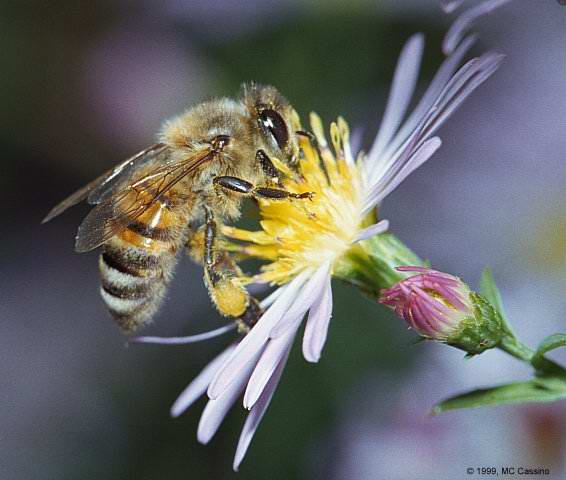
The world may be on the brink of biological disaster after news that a third of US bee colonies did not survive the winter. Honey bees are vital insect pollinators, responsible for the healthy development of many of the world’s major food crops. P

Disturbing evidence that honeybees are in terminal decline has emerged from the United States where, for the fourth year in a row, more than a third of colonies have failed to survive the winter.

The decline of the country’s estimated 2.4 million beehives began in 2006, when a phenomenon dubbed colony collapse disorder (CCD) led to the disappearance of hundreds of thousands of colonies. Since then more than three million colonies in the US and billions of honeybees worldwide have died and scientists are no nearer to knowing what is causing the catastrophic fall in numbers.

The number of managed honeybee colonies in the US fell by 33.8% last winter, according to the annual survey by the Apiary Inspectors of America and the US government’s Agricultural Research Service (ARS).

The collapse in the global honeybee population is a major threat to crops. It is estimated that a third of everything we eat depends upon honeybee pollination, which means that bees contribute some US$39bn to the global economy.

Potential causes range from parasites, such as the bloodsucking varroa mite, to viral and bacterial infections, pesticides and poor nutrition stemming from intensive farming methods. The disappearance of so many colonies has also been dubbed “Mary Celeste syndrome” due to the absence of dead bees in many of the empty hives.

US scientists have found 121 different pesticides in samples of bees, wax and pollen, lending credence to the notion that pesticides are a key problem.

“We believe that some subtle interactions between nutrition, pesticide exposure and other stressors are converging to kill colonies,” said Jeffery Pettis, of the ARS’s bee research laboratory.

A global review of honeybee deaths by the World Organisation for Animal Health (OIE) reported last week that there was no one single cause, but pointed the finger at the “irresponsible use” of pesticides that may damage bee health and make them more susceptible to diseases. Bernard Vallat, the OIE’s director-general, warned:

“Bees contribute to global food security, and their extinction would represent a terrible biological disaster.”

Dave Hackenberg of Hackenberg Apiaries, the Pennsylvania-based commercial beekeeper who first raised the alarm about CCD, said that last year had been the worst yet for bee losses, with 62% of his 2,600 hives dying between May 2009 and April 2010.

“It’s getting worse,” he said. “The AIA survey doesn’t give you the full picture because it is only measuring losses through the winter. In the summer the bees are exposed to lots of pesticides. Farmers mix them together and no one has any idea what the effects might be.”

Pettis agreed that losses in some commercial operations are running at 50% or greater. “Continued losses of this magnitude are not economically sustainable for commercial beekeepers,” he said, adding that a solution may be years away. “Look at Aids, they have billions in research dollars and a causative agent and still no cure. Research takes time and beehives are complex organisms.”

In the UK it is still too early to judge how Britain’s estimated 250,000 honeybee colonies have fared during the long winter. Tim Lovett, president of the British Beekeepers’ Association, said: “Anecdotally, it is hugely variable. There are reports of some beekeepers losing almost a third of their hives and others losing none.” Results from a survey of the association’s 15,000 members are expected this month.

John Chapple, chairman of the London Beekeepers’ Association, put losses among his 150 members at between a fifth and a quarter. Eight of his 36 hives across the capital did not survive. “There are still a lot of mysterious disappearances,” he said. “We are no nearer to knowing what is causing them.”

Bee farmers in Scotland have reported losses on the American scale for the past three years. Andrew Scarlett, a Perthshire-based bee farmer and honey packer, lost 80% of his 1,200 hives this winter. But he attributed the massive decline to a virulent bacterial infection that quickly spread because of a lack of bee inspectors, coupled with sustained poor weather that prevented honeybees from building up sufficient pollen and nectar stores.

The government’s National Bee Unit has always denied the existence of CCD in Britain, despite honeybee losses of 20% during the winter of 2008-09 and close to a third the previous year. It attributes the demise to the varroa mite – which is found in almost every UK hive – and rainy summers that stop bees foraging for food.

In a hard-hitting report last year, the UK National Audit Office suggested that amateur beekeepers who failed to spot diseases in bees were a threat to honeybees’ survival and called for the National Bee Unit to carry out more inspections and train more beekeepers. Last summer MPs on the influential cross-party public accounts committee called on the government to fund more research into what it called the “alarming” decline of honeybees.

The UK Department for the Environment, Food and Rural Affairs has contributed £2.5m towards a £10m fund for research on pollinators. The public accounts committee has called for a significant proportion of this funding to be “ring-fenced” for honeybees. Decisions on which research projects to back are expected this month.

WHY BEES MATTER

Flowering plants require insects for pollination. The most effective is the honeybee, which pollinates 90 commercial crops worldwide. As well as most fruits and vegetables – including apples, oranges, strawberries, onions and carrots – they pollinate nuts, sunflowers and oil-seed rape. Coffee, soya beans, clovers – like alfafa, which is used for cattle feed – and even cotton are all dependent on honeybee pollination to increase yields.

In the UK alone, honeybee pollination is valued at £200m (about $300m). Mankind has been managing and transporting bees for centuries to pollinate food and produce honey, nature’s natural sweetener and antiseptic. Their extinction would mean not only a colourless, meatless diet of cereals and rice, and cottonless clothes, but a landscape without orchards, allotments and meadows of wildflowers – and the collapse of the food chain that sustains wild birds and animals.

By Alison Benjamin for The Guardian UK, May 4, 2010

Europeans Unite Against GM Food

The European Commission has just approved growing genetically modified crops for the first time in 12 years, putting the GM lobby’s profits over public concerns – 60% of Europeans feel we need more information before growing foods that could threaten our health and environment.

A new initiative allows 1 million EU citizens a unique chance to make official requests of the European Commission. Let’s build a million voices for a ban on GM foods until the research is done.

Sign this petition and spread the word!

India hates Genetically Modified food

“We shouldn’t be a part of a system that will destroy traditional seeds and crops and allow multinational corporations to infringe on the agriculture sector.”

Indian Chief Minister VS Achuthanandan, saying Genetically Modified food would lead to the ‘colonization’ of the food sector.

The Guardian UK, 9 February 2010.

How much money farmers get

Out of every dollar we spend at a store, only 8 cents makes it back to the farmer.

Organic food isn’t posh

“The paradox is there’s this view that organic is elitist, it’s expensive, it’s a lifestyle choice for people who can afford it. As far as I’m concerned it’s not elitist to believe everyone should have the right to high-quality, nutritious food from sustainable farming systems. What’s elitist is that a handful of corporations have got a vice-like grip on the farming systems and food.”

Patrick Holden, Soil Association director, rejecting claims that organic is expensive and elitist.

Monsanto seed business role revealed

Confidential contracts detailing Monsanto Co.’s business practices reveal how the world’s biggest seed developer is squeezing competitors, controlling smaller seed companies and protecting its dominance over the multibillion-dollar market for genetically altered crops, an Associated Press investigation has found.

With Monsanto’s patented genes being inserted into roughly 95 percent of all soybeans and 80 percent of all corn grown in the U.S., the company also is using its wide reach to control the ability of new biotech firms to get wide distribution for their products, according to a review of several Monsanto licensing agreements and dozens of interviews with seed industry participants, agriculture and legal experts.

Declining competition in the seed business could lead to price hikes that ripple out to every family’s dinner table. That’s because the corn flakes you had for breakfast, soda you drank at lunch and beef stew you ate for dinner likely were produced from crops grown with Monsanto’s patented genes.

Monsanto’s methods are spelled out in a series of confidential commercial licensing agreements obtained by the AP. The contracts, as long as 30 pages, include basic terms for the selling of engineered crops resistant to Monsanto’s Roundup herbicide, along with shorter supplementary agreements that address new Monsanto traits or other contract amendments.

The company has used the agreements to spread its technology — giving some 200 smaller companies the right to insert Monsanto’s genes in their separate strains of corn and soybean plants. But, the AP found, access to Monsanto’s genes comes at a cost, and with plenty of strings attached.

For example, one contract provision bans independent companies from breeding plants that contain both Monsanto’s genes and the genes of any of its competitors, unless Monsanto gives prior written permission — giving Monsanto the ability to effectively lock out competitors from inserting their patented traits into the vast share of U.S. crops that already contain Monsanto’s genes.

Monsanto’s business strategies and licensing agreements are being investigated by the U.S. Department of Justice and at least two state attorneys general, who are trying to determine if the practices violate U.S. antitrust laws. The practices also are at the heart of civil antitrust suits filed against Monsanto by its competitors, including a 2004 suit filed by Syngenta AG that was settled with an agreement and ongoing litigation filed this summer by DuPont in response to a Monsanto lawsuit.

The suburban St. Louis-based agricultural giant said it’s done nothing wrong.

“We do not believe there is any merit to allegations about our licensing agreement or the terms within,” said Monsanto spokesman Lee Quarles. He said he couldn’t comment on many specific provisions of the agreements because they are confidential and the subject of ongoing litigation.

“Our approach to licensing (with) many companies is pro-competitive and has enabled literally hundreds of seed companies, including all of our major direct competitors, to offer thousands of new seed products to farmers,” he said.

The benefit of Monsanto’s technology for farmers has been undeniable, but some of its major competitors and smaller seed firms claim the company is using strong-arm tactics to further its control.

“We now believe that Monsanto has control over as much as 90 percent of (seed genetics). This level of control is almost unbelievable,” said Neil Harl, agricultural economist at Iowa State University who has studied the seed industry for decades. “The upshot of that is that it’s tightening Monsanto’s control, and makes it possible for them to increase their prices long term. And we’ve seen this happening the last five years, and the end is not in sight.”

At issue is how much power one company can have over seeds, the foundation of the world’s food supply. Without stiff competition, Monsanto could raise its seed prices at will, which in turn could raise the cost of everything from animal feed to wheat bread and cookies.

The price of seeds is already rising. Monsanto increased some corn seed prices last year by 25 percent, with an additional 7 percent hike planned for corn seeds in 2010. Monsanto brand soybean seeds climbed 28 percent last year and will be flat or up 6 percent in 2010, said company spokeswoman Kelli Powers.

Monsanto’s broad use of licensing agreements has made its biotech traits among the most widely and rapidly adopted technologies in farming history. These days, when farmers buy bags of seed with obscure brand names like AgVenture or M-Pride Genetics, they are paying for Monsanto’s licensed products.

One of the numerous provisions in the licensing agreements is a ban on mixing genes — or “stacking” in industry lingo — that enhance Monsanto’s power.

One contract provision likely helped Monsanto buy 24 independent seed companies throughout the Farm Belt over the last few years: that corn seed agreement says that if a smaller company changes ownership, its inventory with Monsanto’s traits “shall be destroyed immediately.”

Another provision from contracts earlier this decade– regarding rebates — also help explain Monsanto’s rapid growth as it rolled out new products.

One contract gave an independent seed company deep discounts if the company ensured that Monsanto’s products would make up 70 percent of its total corn seed inventory. In its 2004 lawsuit, Syngenta called the discounts part of Monsanto’s “scorched earth campaign” to keep Syngenta’s new traits out of the market.

Quarles said the discounts were used to entice seed companies to carry Monsanto products when the technology was new and farmers hadn’t yet used it. Now that the products are widespread, Monsanto has discontinued the discounts, he said.

The Monsanto contracts reviewed by the AP prohibit seed companies from discussing terms, and Monsanto has the right to cancel deals and wipe out the inventory of a business if the confidentiality clauses are violated.

Thomas Terral, chief executive officer of Terral Seed in Louisiana, said he recently rejected a Monsanto contract because it put too many restrictions on his business. But Terral refused to provide the unsigned contract to AP or even discuss its contents because he was afraid Monsanto would retaliate and cancel the rest of his agreements.

“I would be so tied up in what I was able to do that basically I would have no value to anybody else,” he said. “The only person I would have value to is Monsanto, and I would continue to pay them millions in fees.”

Independent seed company owners could drop their contracts with Monsanto and return to selling conventional seed, but they say it could be financially ruinous. Monsanto’s Roundup Ready gene has become the industry standard over the last decade, and small companies fear losing customers if they drop it. It also can take years of breeding and investment to mix Monsanto’s genes into a seed company’s product line, so dropping the genes can be costly.

Monsanto acknowledged that U.S. Department of Justice lawyers are seeking documents and interviewing company employees about its marketing practices. The DOJ wouldn’t comment.

A spokesman for Iowa Attorney General Tom Miller said the office is examining possible antitrust violations. Additionally, two sources familiar with an investigation in Texas said state Attorney General Greg Abbott’s office is considering the same issues. States have the authority to enforce federal antitrust law, and attorneys general are often involved in such cases.

Monsanto chairman and chief executive officer Hugh Grant told investment analysts during a conference call this fall that the price increases are justified by the productivity boost farmers get from the company’s seeds. Farmers and seed company owners agree that Monsanto’s technology has boosted yields and profits, saving farmers time they once spent weeding and money they once spent on pesticides.

But recent price hikes have still been tough to swallow on the farm.

“It’s just like I got hit with bad weather and got a poor yield. It just means I’ve got less in the bottom line,” said Markus Reinke, a corn and soybean farmer near Concordia, Mo. who took over his family’s farm in 1965. “They can charge because they can do it, and get away with it. And us farmers just complain, and shake our heads and go along with it.”

Any Justice Department case against Monsanto could break new ground in balancing a company’s right to control its patented products while protecting competitors’ right to free and open competition, said Kevin Arquit, former director of the Federal Trade Commission competition bureau and now a antitrust attorney with Simpson Thacher & Bartlett LLP in New York.

“These are very interesting issues, and not just for the companies, but for the Justice Department,” Arquit said. “They’re in an area where there is uncertainty in the law and there are consumer welfare implications and government policy implications for whatever the result is.”

Other seed companies have followed Monsanto’s lead by including restrictive clauses in their licensing agreements, but their products only penetrate smaller segments of the U.S. seed market. Monsanto’s Roundup Ready gene, on the other hand, is in such a wide array of crops that its licensing agreements can have a massive effect on the rules of the marketplace.

Monsanto was only a niche player in the seed business just 12 years ago. It rose to the top thanks to innovation by its scientists and aggressive use of patent law by its attorneys.

First came the science, when Monsanto in 1996 introduced the world’s first commercial strain of genetically engineered soybeans. The Roundup Ready plants were resistant to the herbicide, allowing farmers to spray Roundup whenever they wanted rather than wait until the soybeans had grown enough to withstand the chemical.

The company soon released other genetically altered crops, such as corn plants that produced a natural pesticide to ward off bugs. While Monsanto had blockbuster products, it didn’t yet have a big foothold in a seed industry made up of hundreds of companies that supplied farmers.

That’s where the legal innovations came in, as Monsanto became among the first to widely patent its genes and gain the right to strictly control how they were used. That control let it spread its technology through licensing agreements, while shaping the marketplace around them.

Back in the 1970s, public universities developed new traits for corn and soybean seeds that made them grow hardy and resist pests. Small seed companies got the traits cheaply and could blend them to breed superior crops without restriction. But the agreements give Monsanto control over mixing multiple biotech traits into crops.

The restrictions even apply to taxpayer-funded researchers.

Roger Boerma, a research professor at the University of Georgia, is developing specialized strains of soybeans that grow well in southeastern states, but his current research is tangled up in such restrictions from Monsanto and its competitors.

“It’s made one level of our life incredibly challenging and difficult,” Boerma said.

The rules also can restrict research. Boerma halted research on a line of new soybean plants that contain a trait from a Monsanto competitor when he learned that the trait was ineffective unless it could be mixed with Monsanto’s Roundup Ready gene.

Boerma said he hasn’t considered asking Monsanto’s permission to mix its traits with the competitor’s trait.

“I think the co-mingling of their trait technology with another company’s trait technology would likely be a serious problem for them,” he said.

Quarles pointed out that Monsanto has signed agreements with several companies allowing them to stack their traits with Monsanto’s. After Syngenta settled its lawsuit, for example, the companies struck a broad cross-licensing accord.

At the same time, Monsanto’s patent rights give it the authority to say how independent companies use its traits, Quarles said.

“Please also keep in mind that, as the (intellectual property developer), it is our right to determine who will obtain rights to our technology and for what purpose,” he said.

Monsanto’s provision requiring companies to destroy seeds containing Monsanto’s traits if a competitor buys them prohibited DuPont or other big firms from bidding against Monsanto when it snapped up two dozen smaller seed companies over the last five years, said David Boies, a lawyer representing DuPont who previously was a prosecutor on the federal antitrust case against Microsoft Corp.

Competitive bids from companies like DuPont could have made it far more expensive for Monsanto to bring the smaller companies into its fold. But that contract provision prevented bidding wars, according to DuPont.

“If the independent seed company is losing their license and has to destroy their seeds, they’re not going to have anything, in effect, to sell,” Boies said. “It requires them to destroy things — destroy things they paid for — if they go competitive. That’s exactly the kind of restriction on competitive choice that the antitrust laws outlaw.”

Quarles said some of the Monsanto contracts let companies sell their inventory for a period of time, rather than be required to destroy it. Seed companies also don’t have to pay royalty fees on the bags of seed they destroyed.

“Simply put, it was designed to facilitate early adoption of the technology,” he said.

Some independent seed company owners say they feel increasingly pinched as Monsanto cements its leadership in the industry.

“They have the capital, they have the resources, they own lots of companies, and buying more. We’re small town, they’re Wall Street,” said Bill Cook, co-owner of M-Pride Genetics seed company in Garden City, Mo., who also declined to discuss or provide the agreements. “It’s very difficult to compete in this environment against companies like Monsanto.”

By Christopher Leonard, AP Agribusiness Writer , On Sunday December 13, 2009

Cheap meat

“None of us want to be able to buy animals that have been tortured before you eat them, but it is very difficult to make the right choices when product is so cheap.”

Tracey Worcester, writer and director of Pig Business

Cars and food

“Just as we don’t accept cars that aren’t meeting our emission standards, so we shouldn’t accept food that doesn’t meet our welfare standards.”

David Cameron

Climate change and farming

Agriculture is responsible for about 30% of total global Greenhouse Gas emissions. These are produced by:

· fossil fuel use
· flattening forests to grow food
· releasing the carbon dioxide trapped in soil
· raising non-organic livestock, such as cows

But agriculture has a huge potential to create Greenhouse Gas savings. Restocking soil with just a fraction of the carbon content we’ve stripped from it in recent decades could make a significant cut in emissions.

Negotiators gathered in Copenhagen for climate change talks suggest that farmers should be paid to sequester carbon in the soil. This is an extension of a scheme which already exists that protects forests by putting a price on carbon saved by not chopping them down.

But there’s no guarantee that farmers would be either willing or able to participate in carbon trading, and research has shown that forest protection scheme only has short-term benefits for subsistence farmers or foresters.

Dr. Tom MacMillan, executive director of the Food Ethics Council says:

“Farmers have always been weather watchers; now they’re the ones under scrutiny. What comes out of Copenhagen will affect farmers, but whether it will benefit them is open to question.”

“Everyone agrees we need to cut carbon emissions. But carbon trading is no silver bullet – it favors the larger players in agriculture, including multinational companies and governments, not small-scale farmers.”

“Government policies on agriculture and climate that take the needs of the world’s poor into account, and a global commitment to promote sustainable consumption are key.”

Organic food sales rising in the US

Sales for organic and ethical products in the US are rising – more so than sales for conventional products – and consumer demand for those products is increasing despite the global economic downturn, according to a report published in October by Packaged Facts. Approximately one quarter of US adult shoppers buy certified organic food or beverages and one third continue to pay more for organic foods, says the report.

Consumers are buying products that are perceived to fulfill ecofriendly, natural, organic, local, or humane requirements and enhance a company’s corporate responsibility profile. US retailers like WalMart and Safeway are expanding their offerings of organic goods. And leading the way are increased sales of organic breads and grain products and “ethical” drinks, according to market reports.

According to the Organic Trade Association, US supermarket sales of environmentally sustainable or ethical products could rise 8.7 percent by the end of 2009 to nearly $38 billion. In 2008, sales of goods specifically labelled organic rose 17 percent to $ 24.6 billion.

Increased sales for “greener” products – whether energy-efficient lightbulbs or organic produce – are likely the result of increased awareness of sustainability issues in the face of the global economic crisis and climate change, experts say.

“With the economy foremost in consumers’ minds, heightened price sensitivity in the midst of the current recession is inevitably having an effect on the market for ethical products,” said Don Montuori, publisher of Packaged Facts. “However, our survey indicates that more shoppers understand the environmental, social, and economic implications of their choices. The result is a sizable number of consumers who will purchase typically more expensive ethical products even in economically challenging times.”

The report “Ethical Food and Beverage, Personal Care and Household Products in the U.S.” is available at www.reportbuyer.com/go/PKF00176


News archives


Old archives

These are the monthly news archives from before we converted to WordPress. Hopefully we'll get them imported sometime, but for now...

Like this page? Please link to us and let the world know!

^ back to top